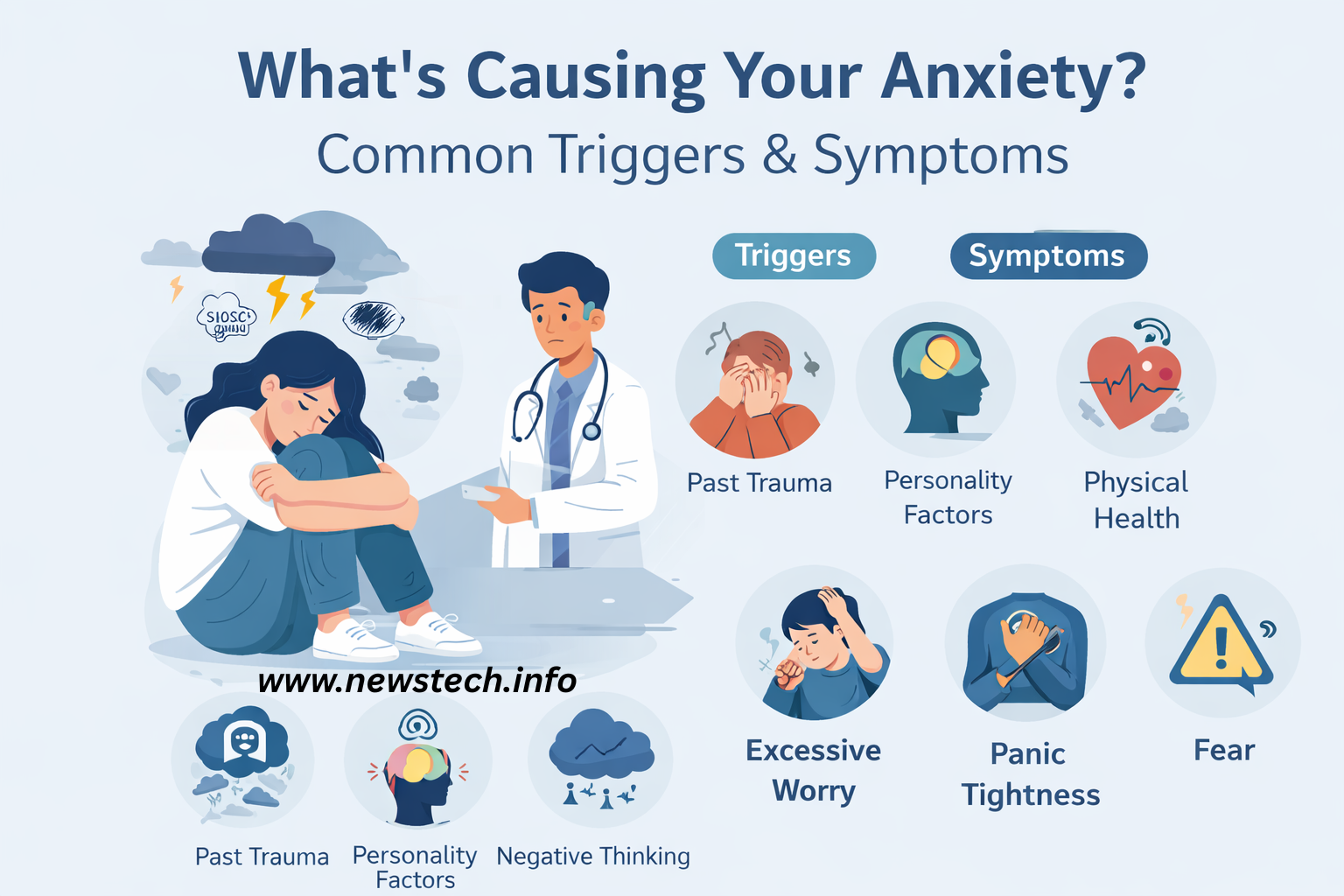
Anxiety is a mental health condition that doesn’t have just one cause. It usually develops due to a combination of factors, including personality traits, physical health, past experiences, and thought patterns. Understanding these causes is the first step toward managing anxiety effectively.
Personality Factors
Research indicates that people with particular personality traits are presumed to have an anxiety disorder. For instance, people who lack self-confidence, are perfectionists, timid, inhibited, controlling, or easily flustered. This can apply to kids, adolescents, and adults as well.
Physical Health Conditions
Physical health issues can also contribute to anxiety or make symptoms worse. Conditions such as:
- Asthma
- Diabetes
- High Blood Pressure
- Heart Disease
may influence anxiety levels and even affect treatment outcomes. A few physical problems can also simulate this condition, like an overactive thyroid. In these cases, one must consult a doctor to determine if their physical condition is causing them anxiety or not.
Trauma Caused In The Past
In most cases, Anxiety is usually caused by some traumatic experience in the past. For example:
- Embarrassing or humiliating experiences during childhood
- Constant criticism or bullying
- Verbal, physical, or sexual abuse
- Family conflicts or relationship issues
This type of traumatic experience can make you lose confidence, which can turn into anxiety at some point later on.
Negative or Overthinking Mindset
If one has a negative or uneasy mindset, it can also cause them a severe anxiety disorder. Because people with this type of mindset will always worry about every step of their life;
- What if I can’t do this right?
- What if I can’t complete this task on time?
- Where do I go from here?
- What if I fail?
- What if I disappoint others?
- What if I’m a burden?
- What if I am a bother to them?
All these questions are causing them anxiety because they lack confidence and keep demoralizing themselves.
How Anxiety Affects the Body
Anxiety doesn’t only cause tension or fear, but in severe cases, such as:
- Chest Pain
- Shortness of Breath
- Dizziness
- Panic Attacks
People can experience anxiety on an occasional basis, and sometimes it is normal, due to the daily stressful life. However, if someone is experiencing it frequently, it can be worrisome. Small episodes of anxiety attacks can turn into severe disorders, like:
- Agoraphobia
- Panic Disorder
- Selective Mutism
- Social Anxiety Disorder
- Generalized Anxiety Disorder (GAD)
When Should You Ask for Help?
If anxiety starts interfering with your daily routine, work, relationships, or social life, it’s important to seek professional help. Early treatment can prevent anxiety from worsening.
Anxiety is treatable through:
- Counseling or therapy
- Medication (when required)
- Lifestyle changes and coping strategies
Speaking up and seeking help is not a weakness — it’s the first step toward healing.
When to Seek Help for Anxiety
Anxiety is common, but that doesn’t mean you have to face it alone. If anxiety starts to interfere with your daily life, work, relationships, or sleep — or if symptoms like panic attacks, chest tightness, or constant worry become frequent — it’s important to seek professional help.
Early support can prevent anxiety from becoming more severe and help you regain control of your mental well-being.
Free Mental Health & Anxiety Helplines (24/7 Support)
If you or someone you know is struggling with anxiety or emotional distress, confidential help is available:
🌍 Worldwide
- Find a Helpline (IASP): https://findahelpline.com
- Befrienders Worldwide: https://www.befrienders.org
These services help you find trusted local helplines in your country.
🇮🇳 India
- KIRAN (Government of India): 1800-599-0019
- AASRA: +91-22-2754-6669
🇺🇸 United States
- 988 Suicide & Crisis Lifeline: Call or text 988
🇬🇧 United Kingdom & Ireland
- Samaritans: 116 123
🚨 If you are in immediate danger, please contact your local emergency number right away.
Medical Disclaimer
This article is for informational purposes only and is not a substitute for professional medical advice, diagnosis, or treatment. Always seek the guidance of a qualified healthcare provider regarding mental health concerns or anxiety-related symptoms.
Frequently Asked Questions About Anxiety
Anxiety usually does not have a single cause. It often develops due to a combination of factors such as personality traits, past trauma, physical health conditions, chronic stress, and negative thinking patterns.
Mild anxiety may improve with lifestyle changes such as stress management, exercise, and proper sleep. However, persistent or severe anxiety often requires professional support like therapy or medication.
Early signs of anxiety include excessive worry, restlessness, difficulty concentrating, irritability, sleep problems, rapid heartbeat, and constant fear without a clear reason.
Occasional anxiety is a normal response to stress. However, when anxiety becomes frequent, intense, and interferes with daily life, it may be classified as an anxiety disorder.
You should seek help if anxiety affects your work, relationships, sleep, or overall quality of life, or if you experience panic attacks, chest pain, or constant fear.
Leave a Reply