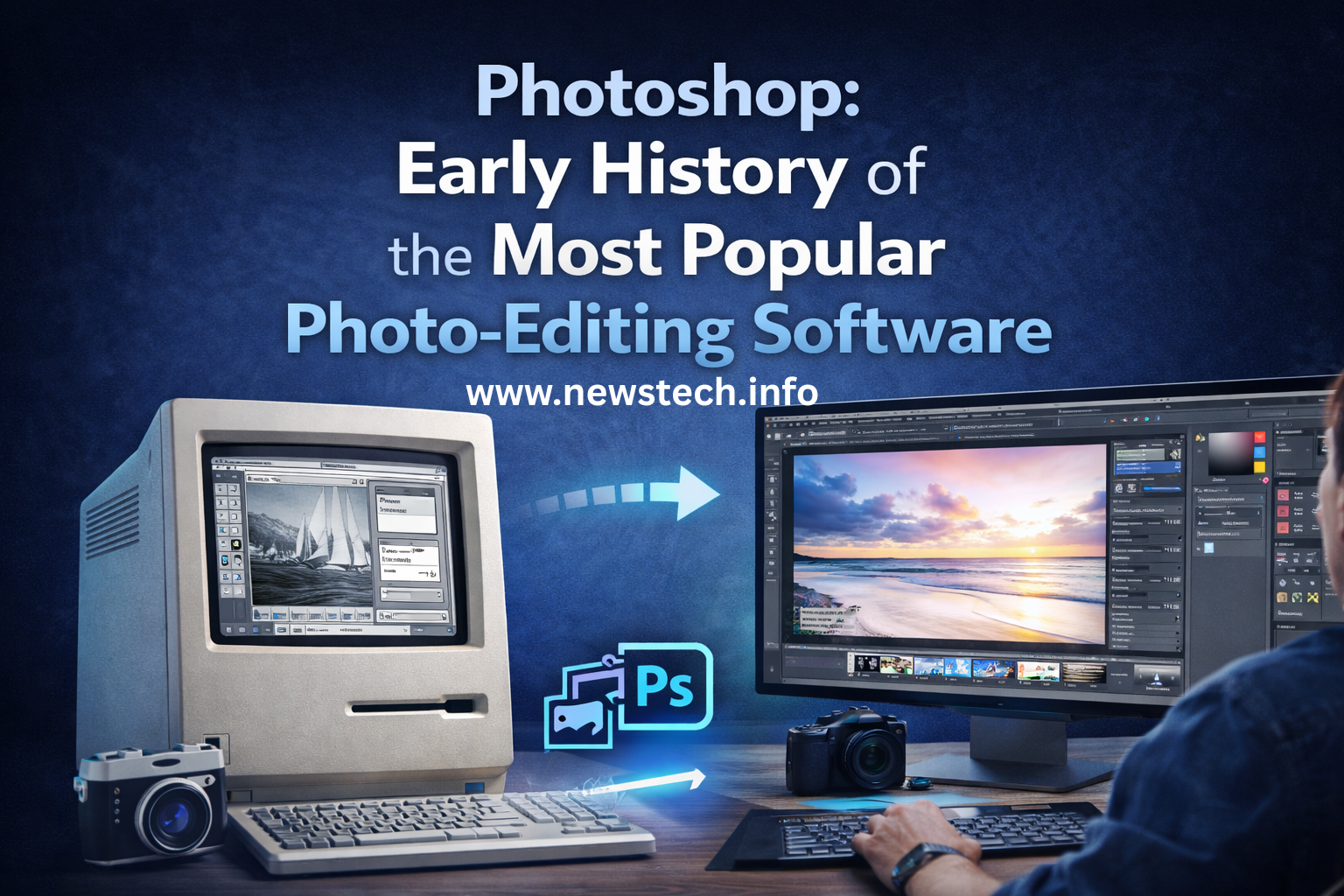
Photoshop is one of the most famous photo-editing software programs worldwide. There are many competing software available in the market. Still, the Photoshop application’s returning users, but the Photoshop application’s returning users will never imagine beyond this comprehensive software. It’s been over 25 years of excellence of Adobe Photoshop’s domination in designers’ technical market the technical market of designers.
Photoshop has such a straightforward interface that even amateurs and professionals can use every feature available in the primary and advanced toolbars. From the simple tasks of editing and composing images to paint, animating them digitally, and doing graphic design, Photoshop offers everything to you. It helps in bringing your creativity and spectacular ideas to reality. In just moments, you can transform photos by using the power of Artificial Intelligence.
You can use the creative power of Photoshop on your devices. Launch the full-size PSDs, reform photos, make composites, and control pens using your fingers.
Photoshop: Early History and Main Events
Thomas and John Knoll founded Photoshop in 1987, and after a year, they traded the distribution rights of Photoshop to Adobe Systems Incorporated. Thomas Knoll, who was pursuing a Ph.D. from the University of Michigan, started to write a program for his Macintosh Plus to show grayscale pictures on a monochromatic display. The Display program or Photoshop got the instinct of John. John was an Industrial Light and Magic representative; on his suggestion, Thomas transformed the Display program into a fully-loaded photo editing program.
Thomas managed to take a half-year break out of his education period in the year 1988 to join his sibling on the project. Thomas changed the program’s name to ImagePro, but this name was not available as someone had already got its copyright. In some months later, in the same year, Thomas again changed the name of this program to Photoshop and sealed a minor deal with the scanner manufacturing company Barneyscan. The deal was to give Barneyscan the license for the distribution of program copies along with a slide scanning device; a decent total of 200 Photoshop units were sold in this deal.
At the same time, John visited Silicon Valley, and he demonstrated the complete setup of Photoshop in front of engineering professionals at Apple and Russell Brown, art director at Adobe. The presentations got appreciation, and then Adobe made the decision to buy the license for the distribution in September 1988. When John had done a lot of work on plug-ins in California, Thomas didn’t leave Ann Arbor to write code. Photoshop 1.0 was launched on February 19, 1990, only for a range of Macintosh computers.
The Barneyscan edition has comprehensive color editing features that were removed from the initial Adobe Shipped edition. Several improvements happened in the management strategies to handle color whenever Adobe releases a product, and Photoshop soon became popular as a standard in the exciting field of digital color editing. When Photoshop 1.0 was launched, the digital retouching on the extensive high-end systems like Scitex had a price of about $300 per hour for simple image retouch operations. The cost of Photoshop 1.0 in the list for Macintosh was $895.
Photoshop was first available for the Macintosh computers, but in the year 1993, the Chief architect of Adobe, Seetharaman Narayanan, carried out the successful porting of Photoshop to MS Windows. This porting process to Windows resulted in enhancing the reach of Photoshop to a broader level in the mass market users, as Microsoft was leading the world of technology in those years, and also expanded globally in just a few years. On exactly March 31 in the year 1995, Adobe bought the distribution rights for Photoshop introduced by the Knoll brothers.
In September 2000, Adobe Photoshop 6.0 was launched after a break of about 20 months from the last release (Photoshop 5.5). It was a game-changer launch that has a big no. of the latest features like Vector Shapes, Liquify filter and more. One of the most lucrative features was a Customized Shape Palette that allows users to use vector shapes to create, instead of using the older lines tool.
Typical Photoshop Tools In the Latest Version
When you launch Photoshop on your device, a toolbar on the side of the Interface appears. That toolbar has a lot of essential tools along with multi-photo functions, which come on the left side of the Interface. All these tools are designed within the categories of art: paint, measure & navigate, select, type, and retouch. The following are the tools every beginner should know about before using the Photoshop application:
Pen Tool
Photoshop comprises some of the editions of this pen tool. The pen tool prepares nearly accurate paths so that you can manipulate them with the help of anchor points. You can use the free form tool to create paths freehand, and with the help of the magnetic pen tool, the path you have drawn holds a close attachment with the outlines of the things in a picture; it’s beneficial to isolate them.
Clone Stamp Tool
The Clone Stamp tool replicates one portion of a picture to another portion of the same picture with the help of a brush. The replication can be done entirely or in parts based on the mode you have opted for. The user also gets the authority to clone any portion of a layer to another layer. The Clone Stamp tool is beneficial for performing a replication process for different things or erasing any faults in a picture.
Shape Tools
It’s one of the most common but essential tools that help in inserting shapes like rectangles, ellipses, polygons, and lines. You can modify any of these shapes with the help of the pen tool, direct selection tool, and more to create specific graphical content. Besides, Photoshop offers some additional shapes like birds, symbols, and herbs.
Measure & Navigate
The eyedropper tool chooses a color from the surface of the picture you have taken and keeps its sample to use later. The hand tool helps you in navigating a picture through its movement in any direction, and the zoom tool helps in enlarging the portion of a clicked picture available in a closer view.
Conclusion
Adobe Photoshop is an excellent choice for designers. The biggest reason behind the successful run of Photoshop software in the technical market of designers is Adobe’s expertise in providing the latest creative features with each version update. It’s always a pleasure to become a returning customer of a top-performing productivity application and brand like Adobe Photoshop. We hope this article may help you in learning about the early history of Photoshop.
Leave a Reply