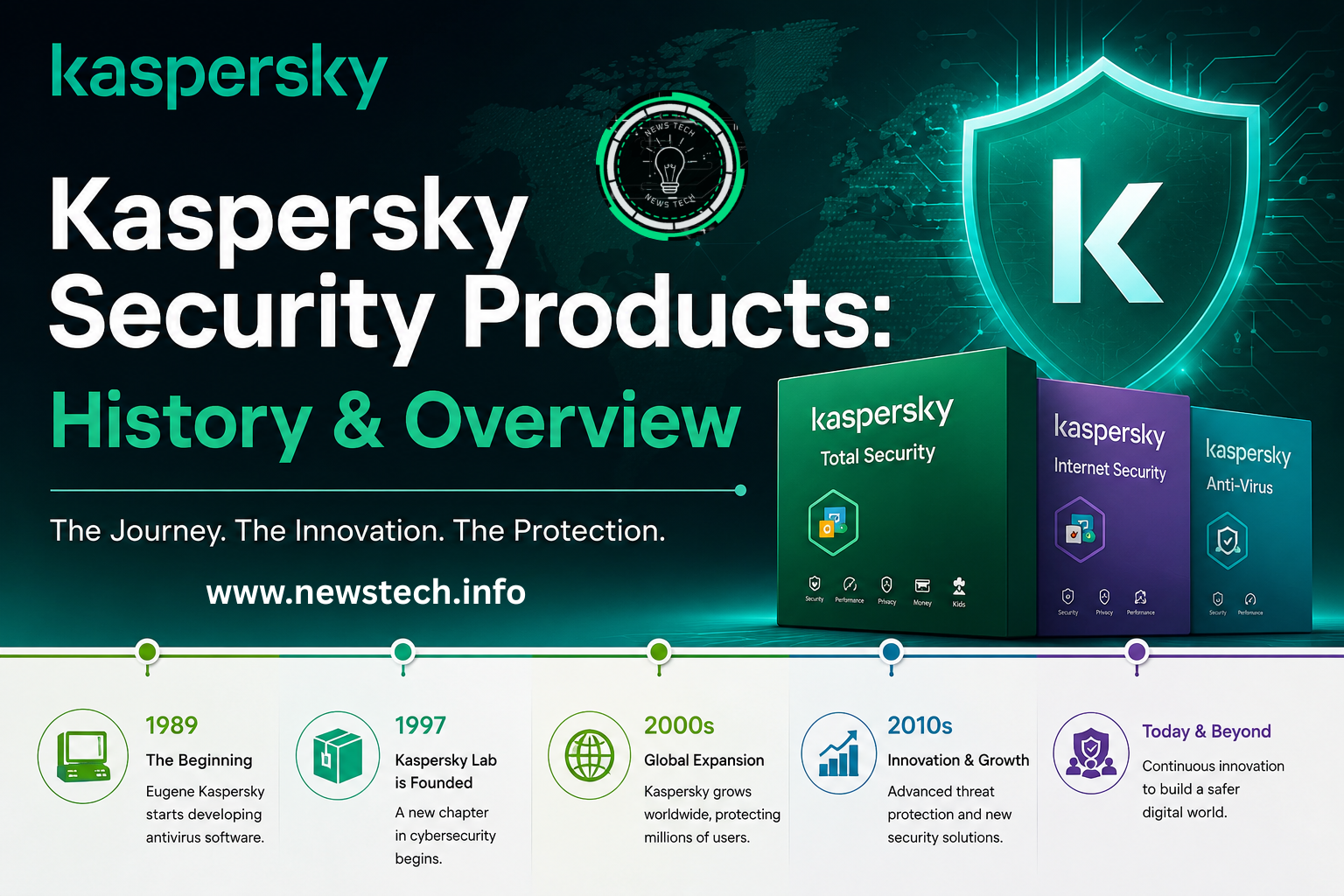
In today’s digital world, cyber threats are becoming more advanced every day. From viruses and ransomware to phishing attacks and identity theft, protecting your personal and business data has never been more important. This is where Kaspersky has built its reputation as one of the world’s leading cybersecurity companies.
Founded in 1997, Kaspersky has spent decades developing innovative security technologies designed to safeguard computers, smartphones, servers, and business networks. Today, its products are used by millions of individuals and organizations across the globe, helping detect, prevent, and respond to a wide range of cyber threats.
Over the years, the company has expanded beyond traditional antivirus software to offer complete cybersecurity solutions, including internet security, endpoint protection, VPN services, password management, cloud security, threat intelligence, and enterprise security platforms.
In this guide, we’ll explore Kaspersky’s history, its journey from a small antivirus project to a globally recognized cybersecurity brand, its major milestones, partnerships, controversies, and why it continues to play an important role in the cybersecurity industry.
What Is Kaspersky?
Kaspersky is an international cybersecurity company that develops digital security solutions for home users, small businesses, large enterprises, and government organizations. Its software is designed to protect users against malware, ransomware, spyware, phishing attacks, data breaches, online fraud, and other evolving cyber threats.
The company combines artificial intelligence, machine learning, cloud-based threat intelligence, and decades of cybersecurity research to identify and block malicious activities before they can cause damage. Today, Kaspersky’s product portfolio includes:
- Antivirus protection
- Internet Security
- Total device protection
- Password Manager
- VPN Secure Connection
- Safe Kids parental controls
- Endpoint Security
- Cloud Security
- Threat Intelligence services
- Extended Detection and Response (XDR)
- Industrial Cybersecurity solutions
Its products are available for Windows, macOS, Android, iOS, and various enterprise platforms, making Kaspersky one of the most comprehensive cybersecurity providers in the industry.
A Quick Overview of Kaspersky
Since its establishment, Kaspersky has focused on one primary mission—making the digital world safer for everyone.
The company has invested heavily in malware research, threat intelligence, and security innovation. Its Global Research and Analysis Team (GReAT) regularly investigates sophisticated cyberattacks, ransomware campaigns, banking malware, and nation-state threats that affect users worldwide.
Instead of only removing known viruses, modern Kaspersky products use multiple layers of protection, including:
- Real-time malware detection
- Behavioral analysis
- Cloud-assisted security
- AI-powered threat detection
- Web protection
- Email security
- Identity protection
- Anti-phishing technologies
- Privacy tools
This multi-layered approach helps detect both known and previously unseen cyber threats.
The Story Behind Kaspersky
Every successful technology company starts with an idea, and Kaspersky is no exception.
The story began in 1989, when cybersecurity expert Eugene Kaspersky discovered a computer virus known as the Cascade Virus. Instead of simply removing the infection, he became fascinated by understanding how computer viruses worked and began creating tools to detect and eliminate them.
What started as a personal research project soon evolved into one of the earliest antivirus engines.
The first versions of Eugene’s antivirus software were relatively simple compared to today’s standards. They contained only a small database of virus signatures and were tested among friends and colleagues. However, these early tools laid the foundation for what would eventually become one of the world’s most recognized cybersecurity brands.
As cyber threats continued to evolve, Eugene continuously improved the software by adding new detection methods and expanding its virus database.
The Birth of Anti-Viral Toolkit Pro (AVP)
During the early 1990s, Eugene Kaspersky continued developing his antivirus technology while working at the Russian IT company KAMI.
In 1992, the company introduced Anti-Viral Toolkit Pro (AVP), one of the earliest commercial antivirus products. AVP quickly gained attention because of its strong malware detection capabilities and frequent virus database updates.
At a time when computer viruses were spreading rapidly through floppy disks and early internet connections, AVP offered users a reliable way to protect their systems.
The software’s effectiveness attracted recognition from cybersecurity professionals worldwide.
International Recognition
One of the first major milestones in Eugene Kaspersky’s career came in 1994, when his antivirus technology performed exceptionally well in independent antivirus testing conducted by researchers at the University of Hamburg in Germany.
The recognition significantly increased confidence in AVP and introduced the software to an international audience.
As businesses and consumers became more aware of digital threats, demand for reliable antivirus solutions continued to grow.
The Founding of Kaspersky Lab
Recognizing the growing need for professional cybersecurity solutions, Eugene Kaspersky, Natalya Kaspersky, and Alexey De-Monderik founded Kaspersky Lab in 1997.
The company’s goal was simple: To create advanced cybersecurity software capable of protecting users against both existing and emerging digital threats.
Initially, the company’s flagship product remained AVP. However, trademark issues in the United States required a rebranding, leading to the introduction of the now-famous Kaspersky Anti-Virus name.
This marked the beginning of a new chapter for the company as it prepared to enter global markets.
The CIH Virus and Kaspersky’s Early Success
One of the defining moments in Kaspersky’s early history came in 1998, when the notorious CIH Virus, also known as the Chernobyl Virus, spread rapidly across computers worldwide.
The virus caused severe damage by corrupting hard drives and, in some cases, damaging system BIOS firmware, making infected computers difficult to recover.
During the outbreak, Kaspersky’s antivirus engine was among the first security solutions capable of effectively detecting and removing the virus.
Its strong performance during this crisis significantly enhanced the company’s reputation and attracted attention from international technology partners.
As a result, several software vendors in Europe and Asia began licensing Kaspersky’s antivirus technology for integration into their own security products.
This milestone played an important role in transforming Kaspersky from a regional software developer into an internationally recognized cybersecurity company.
Innovation That Set Kaspersky Apart
During the late 1990s, Kaspersky became known for introducing several technologies that were considered highly advanced for their time.
One notable innovation was the use of quarantine technology, allowing suspicious files to be isolated instead of immediately deleted. This reduced the risk of accidental file loss while giving security researchers the opportunity to analyze new threats safely.
The company also focused on rapid malware analysis and frequent database updates, enabling users to receive protection against newly discovered threats much faster than many competing antivirus solutions.
This commitment to continuous innovation helped establish Kaspersky as one of the industry’s most trusted cybersecurity developers.
Kaspersky’s Global Expansion and Rapid Growth
Following the success of its antivirus technology in the late 1990s, Kaspersky entered a period of rapid international growth. As internet usage increased around the world, so did the need for reliable cybersecurity solutions. Businesses and home users alike were searching for software that could protect them from an increasing number of digital threats.
Kaspersky recognized this opportunity early and began expanding beyond its home market. Throughout the early 2000s, the company established offices in several countries, including the United Kingdom, Germany, France, Poland, the Netherlands, China, Japan, and the United States. This international presence helped the company build stronger relationships with customers, technology partners, and cybersecurity professionals.
By continuously improving its products and expanding its customer support network, Kaspersky became one of the world’s most recognized cybersecurity brands.
Expanding Across New Markets
As cybercrime continued to grow, Kaspersky invested heavily in expanding its operations across Asia, the Middle East, Africa, and Latin America. The company gradually introduced localized customer support, regional research teams, and language-specific products to better serve users around the world.
This strategy allowed Kaspersky to reach millions of new customers while adapting its security solutions to meet local cybersecurity challenges. Over time, its products became available in hundreds of countries and regions, serving:
- Home users
- Small businesses
- Large enterprises
- Educational institutions
- Financial organizations
- Government agencies (where permitted)
- Critical infrastructure providers
This global reach helped establish Kaspersky as a major player in the cybersecurity industry.
Building a Complete Cybersecurity Ecosystem
While Kaspersky initially focused on antivirus software, the company soon realized that cyber threats were becoming more sophisticated than traditional viruses.
Hackers were developing ransomware, phishing attacks, spyware, banking malware, zero-day exploits, and advanced persistent threats (APTs).
To address these evolving risks, Kaspersky transformed from an antivirus developer into a full-scale cybersecurity company. Its growing portfolio now includes solutions for:
Home Users
- Antivirus protection
- Internet Security
- Total Security
- Password Manager
- VPN Secure Connection
- Safe Kids parental controls
- Identity protection
- Privacy monitoring
Business Users
- Endpoint Security
- Endpoint Detection and Response (EDR)
- Extended Detection and Response (XDR)
- Cloud Security
- Hybrid Cloud Protection
- Email Security
- Threat Intelligence
- Managed Detection and Response (MDR)
- Industrial Cybersecurity
- Security Awareness Training
This diversification allowed Kaspersky to protect users at every level, from individual devices to large corporate networks.
Innovation at the Core
One of the key reasons behind Kaspersky’s long-term success is its commitment to innovation.
Instead of relying solely on traditional virus signature databases, the company gradually introduced advanced technologies capable of detecting unknown threats before they caused harm. Modern Kaspersky products use multiple layers of protection, including:
Artificial Intelligence
AI helps identify suspicious behavior, detect unusual software activity, and improve malware detection speed.
Machine Learning
Machine learning models continuously analyze millions of files to recognize previously unseen threats.
Behavioral Analysis
Rather than looking only for known malware, behavioral analysis monitors how programs behave and blocks suspicious actions in real time.
Cloud-Assisted Threat Intelligence
Kaspersky’s cloud infrastructure allows users to receive rapid protection against newly discovered malware without waiting for large software updates.
Exploit Prevention
The software helps defend against vulnerabilities commonly targeted by cybercriminals before attackers can exploit them.
Together, these technologies provide layered protection against both known and emerging cyber threats.
The Global Research and Analysis Team (GReAT)
One of Kaspersky’s most respected divisions is its Global Research and Analysis Team (GReAT).
This team consists of experienced cybersecurity researchers who investigate some of the world’s most sophisticated cyber threats. Their work includes:
- Investigating ransomware groups
- Tracking banking malware
- Monitoring state-sponsored cyber campaigns
- Discovering zero-day vulnerabilities
- Publishing cybersecurity research
- Sharing threat intelligence with security professionals
Many of the team’s findings have contributed to a better understanding of global cybercrime and have helped organizations strengthen their defenses against emerging attacks.
Kaspersky Security Network (KSN)
To improve protection against rapidly evolving threats, Kaspersky developed the Kaspersky Security Network (KSN).
This cloud-based threat intelligence system allows participating users to anonymously share information about suspicious files and cyber threats.
By analyzing data collected from millions of devices worldwide, KSN helps identify new malware much faster than traditional antivirus methods.
When a new threat is detected, protective updates can often be distributed to users within a short period, helping reduce the risk of widespread infections.
This real-time intelligence has become an important part of Kaspersky’s modern cybersecurity approach.
Strategic Technology Partnerships
Over the years, Kaspersky has collaborated with numerous technology companies to expand the reach of its security technologies.
Its antivirus engine has been licensed by several organizations for integration into their own security products and services.
The company has also partnered with technology providers, educational institutions, cybersecurity organizations, and research communities to improve digital security standards and share threat intelligence.
These partnerships have helped strengthen Kaspersky’s presence in both consumer and enterprise cybersecurity markets.
Awards and Industry Recognition
Throughout its history, Kaspersky has received numerous awards and certifications from independent security testing organizations. Its products have consistently performed well in areas such as:
- Malware detection
- Ransomware protection
- Performance
- Low false-positive rates
- Advanced threat prevention
Independent testing laboratories regularly evaluate antivirus products against thousands of malware samples, real-world attacks, and phishing attempts.
Strong performance in these tests has contributed to Kaspersky’s reputation as one of the leading cybersecurity vendors in the industry.
While test results naturally vary over time, the company has maintained a long-standing presence in independent security evaluations.
Major Milestones in Kaspersky’s Journey

The following timeline highlights some of the company’s most significant milestones.
| Year | Milestone |
|---|---|
| 1989 | Eugene Kaspersky begins developing antivirus software after studying the Cascade Virus. |
| 1992 | Anti-Viral Toolkit Pro (AVP) is introduced. |
| 1994 | AVP gains international recognition in independent antivirus testing. |
| 1997 | Kaspersky Lab is officially founded. |
| 1998 | AVP successfully combats the CIH (Chernobyl) virus outbreak. |
| Early 2000s | Global expansion begins across Europe, Asia, and North America. |
| Late 2000s | Expansion into the Middle East, Africa, and additional international markets. |
| 2010s | Enterprise security portfolio grows significantly. |
| 2020s | Continued focus on AI-powered cybersecurity, cloud security, privacy tools, and enterprise protection. |
Adapting to Modern Cybersecurity Challenges
Cyber threats today are far more sophisticated than they were when Kaspersky first entered the market. Modern attacks often involve:
- Artificial intelligence
- Ransomware-as-a-Service (RaaS)
- Supply chain attacks
- Cloud vulnerabilities
- Cryptocurrency scams
- Mobile malware
- Phishing campaigns
- Identity theft
To address these challenges, Kaspersky continues to develop technologies that combine automation, behavioral analysis, machine learning, and global threat intelligence.
Rather than simply detecting malware after infection, modern cybersecurity focuses on preventing attacks before they can compromise systems or steal sensitive information.
This proactive approach has become an important part of Kaspersky’s overall security strategy.
Kaspersky’s Challenges and Global Controversies
Like many large technology companies, Kaspersky has faced several challenges throughout its history. While the company has earned recognition for its cybersecurity expertise and malware research, it has also been the subject of public scrutiny and government investigations in some countries.
Beginning in the mid-2010s, concerns were raised by several Western governments regarding Kaspersky’s Russian origins and the possibility of foreign government influence. These concerns led to increased regulatory reviews and restrictions on the use of Kaspersky software within certain government organizations.
Kaspersky has consistently denied allegations that it cooperates with any government for cyber-espionage purposes. The company has repeatedly stated that it is a private cybersecurity business focused solely on protecting customers from cyber threats.
Because cybersecurity is closely connected to national security, discussions surrounding Kaspersky often involve both technical security and geopolitical considerations.
Transparency and Trust Initiatives
To strengthen customer confidence, Kaspersky introduced several transparency initiatives aimed at increasing openness about its products, development processes, and data handling practices. These efforts include:
- Transparency Centers where government agencies, business partners, and independent experts can review aspects of the company’s source code and development practices.
- Independent security assessments conducted by recognized testing organizations.
- Regular publication of threat research and technical reports.
- Collaboration with cybersecurity researchers around the world.
- Participation in international discussions on improving global cybersecurity standards.
These initiatives are intended to demonstrate the company’s commitment to transparency and secure software development.
Government Restrictions and Regional Availability
Kaspersky products remain available in many parts of the world. However, some countries have introduced restrictions on their use within specific government departments or public-sector organizations.
For example, the United States has prohibited the use and sale of certain Kaspersky products within its market due to national security concerns. Similar restrictions have also been introduced by a few other governments for official systems.
At the same time, Kaspersky continues to provide cybersecurity products and services in many international markets, serving individual users, businesses, and organizations where its software remains available.
Before purchasing any cybersecurity product, users should always verify local regulations and product availability in their country.
Is Kaspersky Safe to Use?
This is one of the most common questions people search online. The answer depends on several factors, including your location, security requirements, and organizational policies.
From a technical perspective, Kaspersky has consistently demonstrated strong malware detection capabilities in many independent security tests over the years. Its products include multiple security layers designed to protect against viruses, ransomware, phishing attacks, spyware, and other cyber threats.
However, organizations that operate under government regulations or strict compliance requirements should follow the cybersecurity guidelines applicable in their country.
For most home users, choosing an antivirus solution should involve comparing features, privacy policies, independent testing results, system performance, pricing, and customer support before making a decision.
Why Millions of Users Choose Kaspersky
Over the years, Kaspersky has built a loyal user base by offering security solutions that are easy to use while providing advanced protection. Some of the reasons users choose Kaspersky include:
- Multi-layered malware protection
- Real-time threat detection
- AI-assisted security technologies
- Low system resource usage
- Protection against ransomware
- Secure online payment features
- Password management tools
- VPN integration
- Cross-platform support
- Regular security updates
These features have helped Kaspersky remain one of the most recognized names in the cybersecurity industry.
Advantages and Limitations
Every cybersecurity solution has its strengths and weaknesses. Understanding both sides can help users make informed decisions.
Advantages
- Comprehensive protection against a wide range of cyber threats
- User-friendly interface suitable for beginners and professionals
- Advanced malware and ransomware detection
- Wide range of security products for home and business users
- Strong research capabilities through its global cybersecurity team
- Continuous product improvements and security updates
Limitations
- Availability varies by country due to government restrictions.
- Some advanced enterprise features may be more suitable for business environments than home users.
- Premium features require paid subscriptions.
- Organizations should review local compliance requirements before deployment.
The Future of Kaspersky
Cybersecurity continues to evolve as new technologies emerge and cybercriminals develop increasingly sophisticated attack methods. Looking ahead, cybersecurity companies, including Kaspersky, are expected to focus on:
- Artificial Intelligence-powered threat detection
- Cloud-native security platforms
- Zero Trust security architectures
- Identity and access protection
- Internet of Things (IoT) security
- Industrial cybersecurity
- Extended Detection and Response (XDR)
- Managed Detection and Response (MDR)
- Privacy-focused digital protection
As businesses become more connected and digital transformation accelerates, cybersecurity will remain a critical priority for organizations of every size.
Regardless of how the industry changes, protecting personal information, financial data, and business systems will continue to be essential.
Final Thoughts
For more than two decades, Kaspersky has played a significant role in the global cybersecurity industry. What began as a small antivirus project has evolved into a comprehensive portfolio of digital security solutions designed for individuals, businesses, and large organizations.
Throughout its journey, the company has experienced rapid growth, technological innovation, industry recognition, and public challenges. While opinions about the company may differ depending on regional policies and regulatory decisions, its contributions to malware research, threat intelligence, and cybersecurity technology have made it one of the industry’s most recognized names.
As cyber threats continue to evolve, users should evaluate security software based on their individual needs, trusted independent testing, product features, privacy expectations, and local regulations. Staying informed and practicing good cybersecurity habits remain just as important as choosing the right security solution.
Whether you’re researching the history of Kaspersky, comparing security products, or looking to understand its role in today’s cybersecurity landscape, knowing its evolution provides valuable insight into one of the most influential companies in digital security.
Most Frequently Asked Questions
Kaspersky is a cybersecurity company that develops antivirus software, internet security solutions, VPN services, password management tools, endpoint protection, and enterprise cybersecurity products.
Kaspersky Lab was officially founded in 1997 by Eugene Kaspersky, Natalya Kaspersky, and Alexey De-Monderik.
Kaspersky products are available in many countries. However, availability and regulatory status may differ depending on local government policies.
Yes. Modern Kaspersky security products include multiple technologies designed to detect, prevent, and recover from ransomware attacks.
No. Today, Kaspersky offers a complete cybersecurity ecosystem that includes consumer security products, enterprise protection, cloud security, threat intelligence, and privacy solutions.
Its product portfolio includes:
Kaspersky Standard
Kaspersky Plus
Kaspersky Premium
VPN Secure Connection
Password Manager
Safe Kids
Endpoint Security
Cloud Security
Threat Intelligence
XDR solutions
Industrial Cybersecurity
Leave a Reply