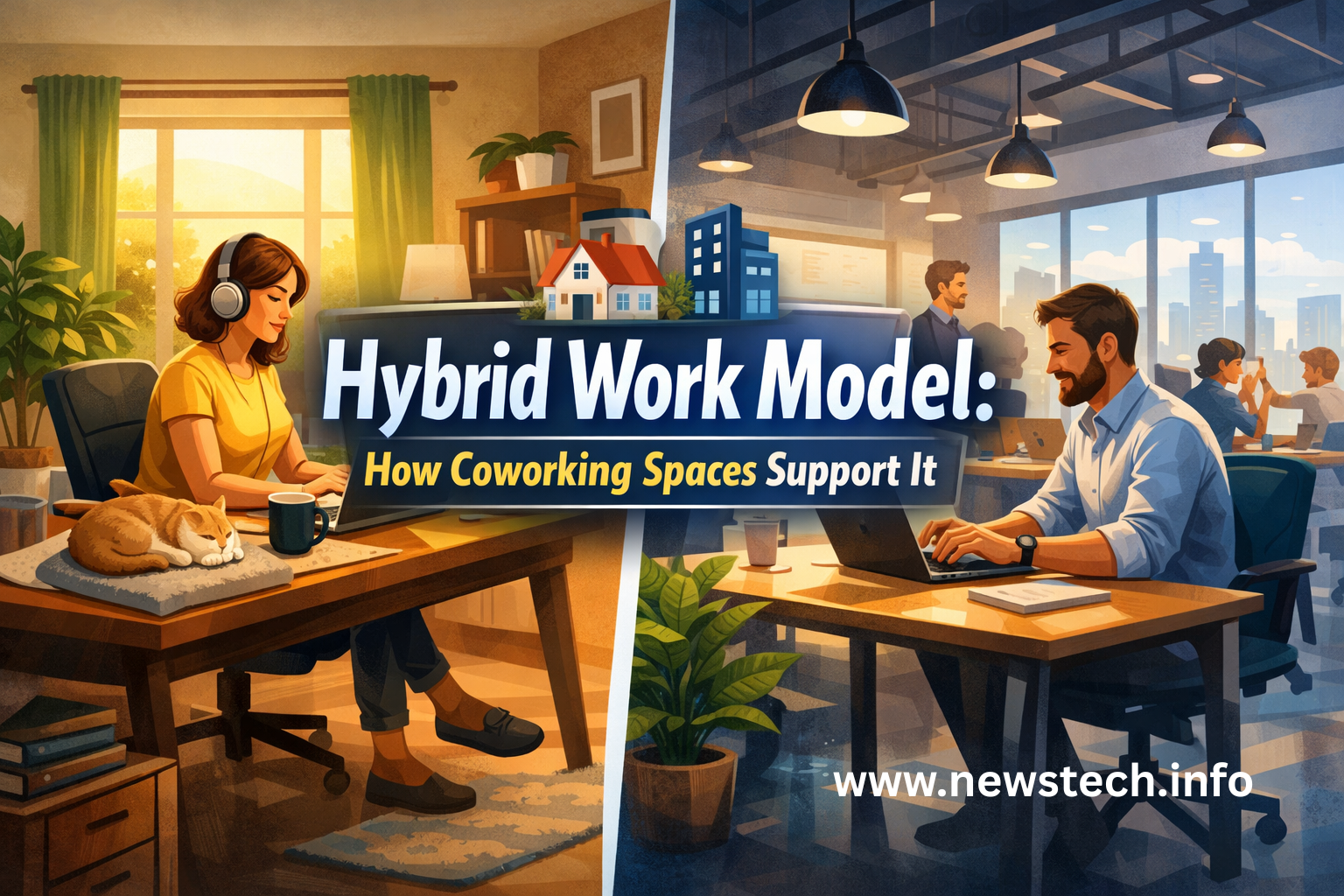
The hybrid work model is the best way to allow employees to divide their time between working from home and working from a shared office space. It gives teams more freedom and helps companies save money on office space. Nowadays, many businesses are choosing this setup because it supports a better work-life balance.
To make hybrid work successful, the work environment must be comfortable, flexible, and well-organized. Teams need clear communication and the right tools to stay connected and productive. When done well, hybrid work can help both employees and businesses grow.
Why Hybrid Work Needs Flexible Spaces
Not every employee has a quiet or productive setup at home. Many employees face challenges such as distractions, lack of proper workspace, or unreliable internet connections. At the same time, teams still need physical spaces where they can collaborate, brainstorm ideas, and hold meetings. Teams still need a place to meet, share ideas, and work together in person. Companies also want to avoid long-term office leases that limit flexibility. At the same time, businesses need a professional space to meet clients and partners.
Coworking spaces offer a practical solution. They provide ready-to-use offices without the high costs of traditional setups.
How Coworking Spaces Support Hybrid Work
Nowadays, Coworking Spaces offer:
- Flexible Membership Plans
- Ready to Use Infrastructure
- Better Collaboration
- Good Cost Efficiency
1. Flexible Membership Plans
Businesses can choose plans based on their needs—daily, weekly, or monthly. This eliminates the burden of long-term commitments and allows companies to scale easily.
2. Ready-to-Use Infrastructure
Coworking spaces come fully equipped with high-speed internet, meeting rooms, office furniture, and essential amenities. Teams can start working immediately without setup hassles.
3. Better Collaboration
These spaces encourage interaction and teamwork. Employees can meet in person, share ideas, and collaborate more effectively compared to remote-only setups.
4. Cost Efficiency
Companies save money on rent, maintenance, utilities, and office management. This makes coworking a budget-friendly alternative to traditional offices.
Coworking spaces surely provide an organized structure while still offering flexibility. They create a professional setting that supports focus and teamwork.
Thus, with the right environment and support, hybrid work becomes easier to manage. This makes the model practical and sustainable for modern businesses.
Final Thoughts
Coworking spaces play a crucial role in making the hybrid work model successful. They offer a structured yet flexible environment that supports productivity, collaboration, and professional growth.
With the right balance of remote work and shared office space, businesses can create a sustainable and efficient work culture. As hybrid work continues to grow, coworking spaces will remain an essential part of the modern workplace ecosystem.
Leave a Reply